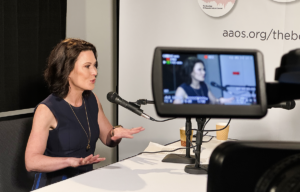

Imagine a biotech CEO presenting to institutional investors. The clinical story is strong, the trial data is clear, and the path to market makes sense. The science checks out and the numbers add up. But the delivery is too quick, the main point is hard to find, and hard questions break the Q&A apart. The meeting ends without results and the funding does not follow.
Scenarios like this happen every day in healthcare. Hospital CEOs present major acquisitions to boards. Physician executives speak to CNBC about important announcements. CMOs handle patient safety incidents as they unfold. In each case, communicating with clarity and credibility matters as much as any clinical or financial decision.
Healthcare communications is a true leadership skill. Kathryn Janicek and Janicek Performance Group help leaders use communications as a business driver for boards, investors, employees, media, patients, and the public.
Why Healthcare Communications Is a Leadership Issue
Healthcare leaders stand at the crossroads of patient care, business results, workforce trust, reputation, compliance, and diverse stakeholders. These are not isolated concerns. In every major board meeting, investor pitch, or public announcement, all these factors are present together.
The stakes are high. The Joint Commission reports that poor communication drives over 60% of adverse events in hospitals. U.S. hospitals lose $12 billion a year to miscommunication. These numbers do not include the costs of a missed investor round, a failed media interaction, or an all-staff meeting that increases anxiety.
Technical expertise gets you a seat at the table. Communication keeps you there. Kathryn Janicek teaches leaders to use clear explanations and strong conviction for everything from hospital restructuring to biotech trial results. Communication directly shapes outcomes.
The Core Challenge: Make Complex Topics Clear
Healthcare communication often faces a gap. What leaders know is not always what audiences can use. Clinical and regulatory language works for peers. In boardrooms, investor events, or TV interviews, it can get in the way.
Each audience sees and hears messages differently. Board members make decisions. Investors evaluate risk. Employees want to know what will change. Patients need reassurance. Janicek Performance Group recommends shaping each message for the audience in the room.
Start With The Most Relevant Message
Introduce the core result or recommendation first. Do not begin with a long background. Let’s look at a few tactics endorsed by Janicek Performance Group:
- Share the headline, not a timeline.
- Explain what the data or decision means for outcomes, not just process.
- Repeat the main recommendation for clarity.
Use Plain Language Without Compromising Science
Simplicity boosts confidence. Jargon creates distance, especially since just 12% of U.S. adults have proficient health literacy. Make technical terms useful to your audience. Here is how Kathryn Janicek presents technical points:
- Define technical words the first time they come up.
- Connect clinical or regulatory details to business and patient outcomes.
- Ground statements with facts, and explain why they matter.
Understand Stakeholders Before Crafting The Message
A message means different things to a board, investors, employees, or patients. Kathryn Janicek advises leaders to map audience reactions ahead of time, then adjust the framing for each group while keeping the facts consistent.
Address Boards And Investors
Boards and investors expect you to guide decisions. Here are Janicek Performance Group’s key points for these high-stakes meetings:
- Make your recommendation and reason clear with a strong opening.
- Describe key risks and show you have prepared for challenges.
- Remove weak language like “maybe” or “I think.”
- Keep your message consistent across every meeting.
Biotech IPO roadshows hit 25 to 40 investors in under two weeks. Consistency counts from first meeting to last.
Guide Employees And Clinical Teams Through Change
During integration, restructuring, or crisis, leadership credibility depends on internal communication. Kathryn Janicek shares these tactics for employee interactions:
- Give clear, direct updates about what is changing.
- Be transparent and address the hard issues early.
- Share actionable next steps.
- Prioritize employee trust in every communication.
Only 23% of employees report that leaders address tough topics proactively. Vague statements, unclear timing, or circling tough issues erode trust and engagement.
Reach Patients, Families, And The Public
Public-facing healthcare communication must show both authority and empathy. Kathryn Janicek uses these supportive approaches in high-visibility moments like service disruptions or care changes:
- Use a calm, empathetic tone along with precise facts.
- Frame every update around what it means for patients and families.
- Demonstrate understanding of those affected by directly addressing their situation.
When delivering virtual care updates, every word and gesture should support the patient’s experience. This is at the core of Janicek Performance Group’s telehealth guidance.
Communicate With Media, Policymakers, And Regulators
Media interviews and regulatory hearings leave no room for error. Kathryn Janicek shares these strategies:
- Focus on your main points. Reporters often use only a small portion of your words.
- Stay concise and confident. Do not speculate.
- Never say “no comment.” Honest directness is better than silence.
- Prepare for public scrutiny and review your messaging in advance.
Build Your Message Before High-Stakes Moments
Janicek Performance Group trains leaders to prepare communication before board presentations, media briefings, or crisis statements. Build your core narrative in advance. Here is a direct process Kathryn Janicek recommends:
Identify The Core Message
Start with one clear idea for your audience to remember. For example:
- “This deal strengthens patient access and improves margins.”
- “Our platform has a clinical edge in a large, unmet market.”
Keep everything focused on this single takeaway.
Select The Proof Points
Support your main idea with a limited set of reasons. Janicek Performance Group uses this approach:
- Choose up to three supporting facts or arguments for your audience.
- Match your examples to the audience’s biggest concerns. Use market data for investors, clinical outcomes for teams.
- Do not overload with too many details.
Prepare For Risks And Tough Questions
Anticipate high-pressure moments and prepare real answers. Kathryn Janicek’s steps for risk management include:
- List likely tough questions for your scenario.
- Craft short, honest responses.
- Practice responses for high-stakes settings like M&A announcements, live media, or quarterly earnings.
Executive Presence Matters In Healthcare
Healthcare leaders are judged by vocal tone and body language as much as by messaging. Research shows that 93% of your impact comes from how you sound and carry yourself.
Kathryn Janicek teaches executive presence using the Janicek Performance Group’s five-pillar model:
- Messaging
- Vocal Delivery
- Body Language
- Mindset
- Appearance
Vocal Delivery For High-Pressure Moments
Pace is critical in board presentations, TV interviews, and all-staff announcements. Janicek Performance Group shows leaders to:
- Slow down and use deliberate pauses to show control.
- Signal authority with steady, clear speech.
- Give audiences time to process your key points.
Body Language That Builds Trust
Nonverbal cues affect how audiences receive your message. Kathryn Janicek’s recommendations include:
- Use open gestures and steady eye contact to show confidence.
- Avoid defensive mannerisms or fidgeting, especially in high-stress settings.
- Show both competence and empathy through intentional movements and expressions.
Mindset: Take Control Of The Room
Mental readiness changes communication during heated board votes, skeptical investor sessions, or tough media Q&A. Janicek Performance Group advises leaders to:
- Set your intention before entering each high-stakes event.
- Prepare emotionally and mentally for the most difficult question you might hear.
- Practice composure as part of your overall preparation.
Crisis Communication: Combine Accuracy, Speed, and Empathy
Healthcare crises such as data breaches, safety incidents, or regulatory inquiries unfold under public scrutiny. Kathryn Janicek coaches leaders to communicate rapidly and transparently to maintain trust. When legal caution, operational uncertainty, and public expectation collide, fill the information gap with facts.
Deliver Facts, Acknowledge Uncertainty, and Provide Next Steps
Clear crisis messaging should follow this approach recommended by Janicek Performance Group:
- Share what you know and confirm facts.
- Admit what is still uncertain.
- Communicate exactly what will happen next or when updates are coming.
- Take responsibility if your organization is involved.
Ensure Alignment Before Public Messaging
Internal conflicts during a crisis damage external credibility. For moments like executive departures or regulatory investigations, Kathryn Janicek always advises:
- Get legal, communications, clinical, and executive teams on the same page.
- Align strategy before any public statement.
- Deliver a single, unified message externally.
Prepare Spokespeople Ahead Of Media Requests
Doctors and scientists are rarely media-trained, even if they are credentialed. Janicek Performance Group’s media training for crisis and major news prepares leaders to:
- Use accessible language that works for broad audiences.
- Avoid technical over-explanation.
- Prioritize privacy by not oversharing in public forums.
- Practice message discipline and on-camera delivery well in advance.
Communication Drives Growth In High-Stakes Scenarios
High-stakes communication is crucial for securing funding, gaining market confidence, and winning support for M&A or new initiatives. Kathryn Janicek and her team build strategies for real world moments like investor days, board approvals, and M&A rollouts.
Tactics For Investor Meetings And IPO Roadshows
Investors look for a compelling story and evidence, especially in biotech or healthtech. Janicek Performance Group recommends this structure for high-visibility investor meetings:
- Present the business case and evidence up front.
- Share how the management team will execute the vision.
- Make your message memorable and confident and bookend your presentation with your core point.
Best Practices In Board Presentations And Approval Meetings
Board meetings are not status updates, they require decision-ready clarity. Kathryn Janicek’s process includes:
- Structure presentations by decision, rationale, risk, and recommendation.
- Lead with the key conclusion, then offer three targeted proof points.
- Practice and preempt possible objections through role play.
Successful M&A Announcements And Integration Updates
During healthcare mergers, employees, investors, and communities all need specifics. Janicek Performance Group uses these proven steps in M&A communications:
- State what will change.
- Clarify what will remain the same.
- Explain clearly why the move matters, early on if possible.
- Assure job security if the facts allow, as 77% of healthcare employees want early reassurance during M&A.
Train The Whole Leader For High-Pressure Settings
Most top healthcare speakers and on-camera professionals have trained across message, delivery, and mindset. Kathryn Janicek’s approach at Janicek Performance Group matches real demands, from board votes on $400 million deals to live national TV.
Use Video Feedback To Spot Blind Spots
Leaders rarely see their subconscious habits under pressure. Janicek Performance Group uses video analysis for board rehearsals, media training, and M&A announcements to:
- Reveal body language and delivery gaps quickly.
- Drive faster improvement through visual feedback.
- Simulate the real moment for maximum realism.
Practice For The Real-World Scenario
Practice should always match the actual challenge. Kathryn Janicek recommends:
- Rehearse under realistic conditions for investor pitches, board meetings, or media Q&A.
- Record and review your performance.
- Refine based on targeted feedback.
Set Clear, Actionable Goals
The aim is to influence business outcomes, like securing a board vote, raising capital, handling a tough interview, or reassuring a workforce. Janicek Performance Group’s coaching gives leaders the strategic communication tools that drive these results.
Make Communication Your Competitive Advantage
In healthcare, leadership communication shapes the board decision, the funding round, the public crisis, and your institutional reputation. Kathryn Janicek and Janicek Performance Group build these skills before the high-stakes moment arrives. Preparation wins the room.
High-impact healthcare communication is not a trait. It is a skill developed with focused coaching and realistic practice. Start building your capability today before your next board presentation, investor meeting, media interview, or crisis scenario.
Contact us to start the conversation.