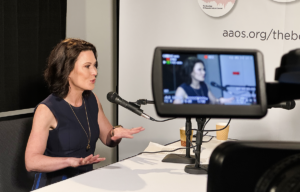

One media interview can change markets, influence investor confidence, or define how your team and customers see your leadership. It can also escalate a crisis or affect important outcomes like a funding round. Press exposure is a business moment with real consequences. Many executives walk into interviews without enough preparation.
Let’s explain what media training is, what Kathryn Janicek and Janicek Performance Group recommend, and a practical framework you can use before you’re in front of a camera or microphone.
What Is Media Training For Executives?
Kathryn Janicek and her team at Janicek Performance Group prepare corporate leaders, founders, and experts to communicate clearly and confidently with journalists, podcast hosts, analysts, and audiences. They teach you to keep your message clear, stay composed under tough questions, and lead interviews with purpose.
As Kathryn Janicek explains, media training gives you the skills to build a strong message that sticks with your audience. It helps you deliver your message in a way that lands and inspires trust. The goal is to make sure nerves, poor preparation, or a tough question do not get you off track.
Why Do Executives Need Media Training?
When you join a Bloomberg, CNBC, Wall Street Journal, or trade interview, you represent your enterprise value and leadership. Editorial coverage is trusted more than advertising.
A strong interview matters for investor confidence, customer trust, and how employees or regulators see your company. The way you communicate shapes coverage. That shapes stakeholder response.
What Is Media Training Not Designed To Do?
Janicek Performance Group stresses that media training is not about learning lines or being rehearsed. The focus is on sharpening your message and helping you keep your own voice.
This is not about avoiding tough questions. It is about sounding authentic and in control, even under high pressure. Leaders often realize how much effort real preparation requires only after going through the process.
When Should Executives And Founders Get Media Training?
Janicek and her team recommend media training in high-stakes situations where public exposure is likely. Here are a few key moments:
- Before making a crisis statement about layoffs or safety incidents
- During an IPO or funding announcement media tour
- For M&A announcements or industry-shaping product launches
- Before earnings calls with media present
- When communicating about legal, regulatory, or congressional issues
- Anytime you need to share a controversial decision or change in leadership
Before a Crisis
Crisis situations give you less time and more pressure. According to Kathryn Janicek, a prepared spokesperson will:
- Respond with clarity and empathy
- Address concerns with facts, not emotion
- Stay in control of the narrative, even when pressed
Avoid reactive or defensive statements that can become the unwanted headline. 28% of business crises get worse due to poor communication, according to the Institute for Crisis Management. Preparation stops this.
Major Company Milestones
During moments like a Series C announcement, IPO media day, or launching a new healthcare solution, you want your message to create the right momentum. Kathryn Janicek teaches leaders to:
- Create a narrative investors and customers can trust
- Use preparation to focus on key outcomes and clarity
- Control the interview’s pace so nothing gets misunderstood
Difficult or Hostile Interviews
High-stakes interviews on business networks or investigative shows can feel adversarial. Prepare by:
- Practicing how to answer skeptical or technical questions
- Bridging back to your key talking points
- Staying composed even if the same question is repeated
What Happens During Executive Media Training?
Janicek Performance Group customizes media training for your role, your industry, and your situation. Here is what they focus on:
Strong Message Development
Kathryn Janicek advises executives to focus on three main messages for any interview. Here is how to prepare:
- Identify the three core points every audience member should remember
- Explain technical or financial terms in simple language
- Support each message with a real example
Avoid generic claims. Speak with detail and proof.
Handling Tough Questions
During training, Kathryn Janicek often asks the difficult questions you want to avoid. To prepare:
- Practice your responses to tough, off-topic, or speculative questions
- Stay accurate and calm, even under pressure
- Build the habit of thinking before answering
Janicek Performance Group recommends: Never say “no comment.” That creates doubt and can negatively influence public perception.
Bridging or Redirecting Questions
Bridging lets you acknowledge a question then return to your main point. Janicek Performance Group often uses these bridging phrases:
- “What’s important to understand is…”
- “Let me put this into context…”
Effective bridging helps you control the interview.
Body Language
Janicek Performance Group focuses on body language and vocal delivery:
- Keep your tone steady and confident
- Use open posture and calm facial expressions
- Pause to emphasize main points
- Maintain eye contact with the camera
Research shows mixed verbal/nonverbal signals reduce credibility. Slowing down helps your message land.
On-Camera Practice and Review
Kathryn Janicek recommends practicing out loud, on camera, and watching yourself back. Here’s how to get the most out of rehearsal:
- Role-play with someone acting as the interviewer
- Record each session and review your tone, speed, and physical cues
- Notice filler words or defensive reactions and rework them
This feedback loop builds confidence and gives you real-time improvement.
How Do You Prepare For Media Interviews?
Kathryn Janicek recommends that executives start preparing for interviews early. Effective prep looks like this:
- Define the business outcome (explain a tough decision, reassure investors, launch a new offering, protect the company reputation)
- Match your delivery to the specific format—TV, radio, podcast, or print
- Research the journalist’s background, recent stories, and style
- Build and memorize your three main messages, each with a supporting example
- Write short, direct answers for the toughest questions you could get (layoffs, regulation, litigation, etc.)
How Should Executives Act During The Interview?
- Give your headline first. Journalists want the main point quickly.
- Speak directly to your stakeholder audience—investors, regulators, customers, or the board.
- Repeat key messages using simple and confident language.
- Stay calm and never fill silence with speculation or jargon.
- Keep your answers brief and quotable.
- Return to your messages if a question comes up more than once.
What Are Common Media Training Mistakes?
Kathryn Janicek sees these mistakes most often:
- Trying to sound rehearsed or perfect instead of clear and credible
- Treating media training as just PR, not a strategic business tool
- Waiting until after being invited to an interview to start preparing
- Letting new product launches, M&A, or IPOs arrive with no proactive training
Janicek Performance Group suggests refreshing your media training every year or after any major company change.
How Can Executive Assistants Help With Press Preparation?
- Gather a short, focused briefing packet. Include format, outlet, journalist, sensitive topics, approved company messages, and event timing
- Protect time for rehearsal so executives do not practice last-minute
- Coordinate messages with communications, legal, and investor teams so everyone is aligned
How Do You Know If Your Media Training Worked?
- Watch for better mock performance, focused messaging, and greater confidence
- Check for message alignment with legal, investor relations, and leadership
- After the interview, look for accurate coverage and positive reactions
- See fewer corrections needed and less risk of misquotes
Consistent preparation brings stronger results, according to Janicek Performance Group.
What’s The First Step To Owning The Interview?
Executives rise to the level of their preparation, says Kathryn Janicek. Those who handle tough interviews best are always the most prepared.
Understanding how media training works is your first step. The next is to act before an interview request shows up in your inbox.
Janicek Performance Group trains executives to communicate clearly, with authority and composure, when it matters most. Whether you have a TV appearance, IPO roadshow, crisis response, or first major interview on your calendar, their team will build a plan for your situation and your message.
Contact us if you are preparing for a high-stakes media moment and want to walk in ready.