At the highest levels of business leadership, credibility isn’t just earned through strategic decisions—it’s established in milliseconds through how you communicate those decisions. After coaching thousands of executives at organizations ranging from startups to $100 billion companies, I’ve observed a persistent pattern that undermines even the most brilliant leaders: the inability to deliver their message with unwavering conviction.
Tentative language signals uncertainty or seeking permission rather than stating commitments. Common examples include:
- I think
- I believe
- Probably
- Maybe
- Hopefully
- Kind of
These seemingly harmless qualifiers do far more damage than most executives realize: they undermine your authority, devalue your insights, and cost you influence in every high-stakes interaction.
The difference between a CEO who commands boardrooms and one who struggles to inspire stakeholder confidence often comes down to a single, costly habit—tentative language that telegraphs uncertainty before you’ve finished your opening sentence.
Explore this article by section:
- How does tentative language affect CEO credibility?
- Why this communication gap persist at senior levels
- The language transformation that changes everything
- The nuance that separates confidence from narcissism
- Why this shift is important for C-suite leaders
- Advanced techniques
- Real world-applications
- FAQs about executive communication training
How Does Tentative Language Affect CEO Credibility?
The “I Think” Problem That’s Costing You Influence
I watch this scenario unfold in high-stakes meetings across corporate America every day: An executive stands to present a transformative strategy. They’ve prepared meticulously. The data support their position. The opportunity is clear. And then they open with, “I think this is going to be really beneficial for our organization.”
That single phrase—“I think”—just devalued everything that follows.
Here’s what your board, your investors, or your medical association members actually hear: uncertainty, hesitation, and a leader seeking permission rather than providing direction. In environments where billions of dollars hinge on executive confidence, where physicians trust your medical device innovation with patient outcomes, or where shareholders evaluate your capacity to navigate market volatility, tentative language is a credibility killer.
“I think” signals that you’re still deliberating. Leaders at your level cannot afford to present conclusions as ongoing internal debates.
The Eye Contact Betrayal: When Your Eyes Sabotage Your Message
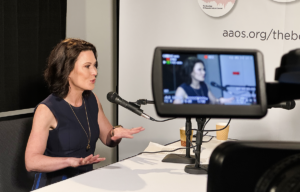
Consider this moment from a recent coaching session captured in the accompanying video: An executive begins with strong intent—“I really appreciate it. It means a lot,”—but immediately breaks eye contact to look down at notes for the next line.
The message received? What they’re saying doesn’t actually mean that much. If appreciation and gratitude were genuine, they wouldn’t need a script to express them.
This pattern reveals a fundamental misunderstanding of high-level communication. Your audience—whether it’s a hospital CEO evaluating your surgical technology or a Fortune 500 board assessing your crisis management plan—reads your physical commitment to your words as evidence of their truthfulness. Looking away during critical moments suggests you’re performing rather than communicating.
The executives who command attention in boardrooms, influence policymakers, and inspire teams understand this principle: your eyes must stay connected when delivering lines that matter. The moment you break that connection to reference notes is the moment you break trust.
Why This Communication Gap Persists at Senior Levels
The irony is that most senior leaders built their careers on technical expertise, strategic thinking, and business acumen. Communication skills were secondary—until they weren’t. By the time you reach the C-suite, your technical knowledge is assumed. What differentiates exceptional leaders from capable executives is their ability to inspire confidence, mobilize resources, and influence stakeholders through masterful communication.
Yet few executives receive formal training in the communication skills that matter most at this level. You’ve attended countless strategy sessions, financial reviews, and industry conferences. But when was the last time someone gave you honest, actionable feedback on how your communication style undermines your leadership impact?
From Tentative to Commanding: The Language Transformation That Changes Everything
Let’s examine the specific shift that separates confident leadership communication from weak positioning. Watch how eliminating just a few words can transform your entire message:
Before: “I think going forward it’s going to be great.”
After: “I’m going to do my best to make sure this is a great relationship and partnership, and it’s going to help your company significantly.”
The transformation isn’t cosmetic—it’s strategic. Notice what changed:
→ Eliminated the qualifier “I think” that positioned the statement as opinion rather than commitment
→ Replaced passive prediction (“it’s going to be”) with active ownership (“I’m going to do my best”)
→ Added specific value proposition (“help your company significantly”) instead of vague optimism (“be great”)
→ Shifted from self-focused language to partnership-centered communication
This isn’t about arrogance or making promises you can’t keep. It’s about clarity and conviction in your commitment. The revised version demonstrates confidence in your ability to deliver value without making grandiose claims. It’s assertive without being narcissistic—a balance that executive leadership demands.
The Nuance That Separates Confidence From Narcissism
As I note in the coaching video, there’s a critical distinction between confident communication and tone-deaf self-promotion. Saying “this is going to be great for you, trust me” sounds narcissistic because it centers your judgment rather than your commitment to the partnership’s success.
The difference comes down to where you place the focus:
- Narcissistic confidence positions you as the hero:
- “I’ve never failed at this.”
- “Trust me, I know what I’m doing.”
- “This will definitely work because I’m running it.”
- Authentic confidence positions your commitment as the driver: “I’m going to do my best to make sure this is a great relationship and a great partnership.” This acknowledges that success requires effort while demonstrating your unwavering commitment to achieving it.
This nuance matters enormously to sophisticated audiences. Fortune 500 boards and medical association leaders can instantly detect the difference between a leader who’s confidently committed to excellence and one who’s overcompensating for insecurity with inflated promises.
Why This Matters More Than Ever for C-Suite Leaders
The demands on leaders have accelerated exponentially. Today’s executive environment demands that you instill confidence and calm while navigating unprecedented complexity. From earnings calls to crisis communications, from investor presentations to media interviews, every interaction becomes a referendum on your leadership capability.
Consider the specific contexts where communication failures cost you credibility and opportunity:
→ In Boardroom Presentations: Directors evaluate not just your strategy but your conviction in executing it. Tentative language raises questions about your confidence in your own plan.
→ During Investor Relations: Analysts and institutional investors assess your ability to navigate challenges. Hedging your communications signals uncertainty about market positioning.
→ In Medical and Scientific Settings: Healthcare executives and medical association leaders require absolute confidence in innovation and patient safety. Qualifying language undermines trust in your organization’s capabilities.
→ At Industry Conferences: Speaking opportunities position you as a thought leader—but only if you deliver your insights with authority that establishes expertise.
→ In Crisis Management: When your organization faces challenges, stakeholders need decisive leadership. This is precisely when tentative language is most damaging.
When you’re presenting to a medical association about a breakthrough device, tentative language doesn’t signal humility—it signals unproven technology. When you’re addressing shareholders during market turbulence, hedging your communications doesn’t demonstrate caution—it demonstrates uncertainty about your own strategy.
At JPG, we’ve worked with leaders managing billions in assets, physicians pioneering medical innovations, and executives navigating organizations through transformational change. The consistent pattern among those who accelerate past their peers isn’t superior technical knowledge—it’s superior command of their communication.
The Practical Application: Three Immediate Shifts
If you’re leading a Fortune 500 company, managing a multi-billion-dollar organization, or representing a medical association, implement these changes in your next high-stakes presentation:
First, eliminate qualifying language. Remove “I think,” “I believe,” “probably,” and “hopefully” from your executive vocabulary when presenting strategic decisions or commitments. These words don’t make you sound thoughtful—they make you sound uncommitted. Replace them with active statements of commitment: “I will ensure,” “We’re committed to,” “This will deliver.”
Second, maintain eye contact during critical lines. If a statement matters enough to include in your presentation, it matters enough to deliver while looking directly at your audience. Practice this deliberately: identify your three most important messages and rehearse delivering them without breaking eye contact. Your notes should support you, not replace authentic connection.
Third, own your commitments with specific language. Replace vague optimism with clear commitments. Instead of “this will be great,” articulate precisely what you’re committing to deliver and why it matters to your audience. Specific outcomes demonstrate strategic thinking; generic optimism suggests you haven’t thought through the details.
Advanced Techniques: Beyond the Basics
For leaders ready to take their communication to the next level, consider these advanced strategies:
Message discipline: Develop three core messages for every high-stakes interaction and relentlessly return to them regardless of questions or tangents. This technique, used extensively in media training, ensures your key points land with audiences.
Strategic pausing: Confident leaders aren’t afraid of silence. A deliberate pause before answering a difficult question demonstrates thoughtfulness and control. Rushing to fill every silence signals discomfort.
Vocal authority: Your tone, pace, and volume communicate as much as your words. Recording and reviewing your presentations reveals vocal patterns that undermine authority—uptalk, vocal fry, rushed speech, or excessive hedging phrases like “kind of” or “sort of.”
Physical presence: Your body language either reinforces or contradicts your message. Closed postures, fidgeting, or physical retreat while making important points signals doubt. Executives who command rooms use open, grounded stances that project confidence.
The Return on Investment: What Changes When You Deliver Lines With Conviction
Leaders who master this transformation report measurable outcomes that extend far beyond better presentations. The impact cascades through every aspect of organizational leadership:
Enhanced team performance: When leaders communicate with clarity and conviction, teams execute with confidence. Ambiguous directives create organizational paralysis; clear communication accelerates action.
Greater stakeholder trust: Investors, board members, and partners evaluate your leadership not only by what you communicate, but also by how you communicate. Mastering confident delivery builds credibility, which translates into increased autonomy and resources.
Accelerated M&A readiness: In merger and acquisition contexts, your ability to present your organization’s value proposition with authority directly impacts valuation and deal terms.
Expanded business opportunities: Whether closing major contracts or forging strategic partnerships, your communication style influences how potential partners evaluate your organization’s stability and leadership quality.
Media and public relations success: When you control media interviews with confidence and message discipline, you shape narratives rather than reacting to them. This skill becomes invaluable during both opportunities and crises.
More importantly, executives experience something more valuable than any single metric—the confidence that comes from knowing their message lands with the impact it deserves. This internal transformation often proves more significant than external outcomes because it fundamentally changes how you show up in every leadership interaction.
Real-World Applications: Industries Where Communication Mastery Drives Results
At JPG, we’ve seen the transformative power of communication mastery across diverse sectors:
Healthcare and Biosciences: Physicians presenting research findings, medical device executives demonstrating innovations to hospital systems, pharmaceutical leaders navigating regulatory communications, and healthcare administrators addressing patient safety concerns all require the ability to communicate complex information with absolute authority.
Construction and Infrastructure: Leaders in this sector face unique communication challenges—from safety briefings that must be heard and followed to investor presentations that secure project financing. Tentative language in construction leadership can literally cost lives and millions in project overruns.
Financial Services and Banking: Whether presenting quarterly earnings, explaining market positions to analysts, or communicating through economic uncertainty, financial services leaders operate in environments where communication confidence directly impacts market capitalization.
Technology and Innovation: Tech executives must translate technical complexity into compelling business cases for boards, investors, and customers. The ability to articulate vision while acknowledging challenges—without hedging into uncertainty—separates funded ventures from failed pitches.
How Janicek Performance Group Transforms Executive Communication
We protect our clients in the media, on stages, in the boardroom, on earnings calls, at conferences and panels, and in all high-stakes meetings. Our comprehensive approach addresses every dimension of executive communication because we understand that true mastery requires more than superficial presentation tips.
Our Core Service Offerings for Executive Leaders
Executive Presence Coaching
Executive presence isn’t about charisma or charm—it’s about the ability to inspire trust, make lasting impressions, and lead with purpose. Our holistic coaching process focuses on the entire leader, from mindset and communication style to delivery, professional branding, and personal branding. We don’t just teach you how to speak confidently; we help you harness your full leadership potential.
Leaders who master executive presence earn the respect of peers, build high-performing teams, and influence key decisions. Whether you’re speaking to your team, the board, or the media, executive presence allows you to communicate with clarity and conviction. Our coaching helps you build influence through a leadership style that inspires loyalty and trust, while enhancing your professional and personal brand to align with your goals and values. Learn more about executive presence coaching >
Media Training
Our media training goes beyond basic interview preparation—we equip you with the strategic mindset, tactical skills, and unflappable confidence needed to excel in any media environment. As a three-time Emmy Award winner with 25 years of media experience, I bring unparalleled insight from both sides of the camera. My experience running live news shows, serving as a media executive, and working as a spokesperson for major crisis events gives me unique perspective on what media professionals need and how spokespersons can excel.
We serve leaders who understand that communication excellence drives business success: physicians presenting research findings, attorneys arguing high-profile cases, C-suite executives presenting to investors and media, athletes transitioning to media appearances, and nonprofit leaders communicating mission and impact to donors. Our training transforms you into a compelling spokesperson who navigates interviews with poise and delivers memorable messages. Learn about our media training services >
Public Speaking Coaching
Exceptional public speaking is the cornerstone of influential leadership. Our public speaking coaching goes far beyond basic presentation skills—we help you develop the presence, messaging mastery, and authentic confidence that turns every speaking opportunity into a catalyst for career advancement and business growth.
Whether you’re preparing for a high-stakes board presentation, keynote address, media interview, or team meeting, our expert coaches provide the strategic guidance and practical techniques you need to command attention, build trust, and inspire action in any audience. We begin by analyzing your current speaking style, identifying strengths to amplify, and pinpointing specific areas for improvement through video analysis and personalized feedback. Learn about our public speaking training >
Leadership Development Programs
We offer tailored leadership programs for C-suites that address the complete spectrum of executive communication needs. From one-on-one coaching to team-wide training, our programs are customized to your organization’s specific challenges and opportunities. Whether you’re preparing for an IPO, navigating organizational transformation, or building leadership bench strength, we design programs that deliver measurable results. Learn about leadership development programs >
Sales Team Training
Our sales training empowers your executives with psychology-driven insights that transform how they connect with clients. Led by our expert trainers with decades of sales leadership experience, we help your team elevate their sales process, enhance their communication skills, and build lasting client relationships that drive results. Our approach is customized to meet your team’s specific needs, equipping them with proven sales strategies to communicate with confidence and consistently exceed performance goals. Learn about sales executive training >
Strategic Communication and Brand Management
We develop strategic communication plans to amplify your voice and strengthen your brand’s visibility. Our brand management expertise brings decades of experience in social media strategy, content creation, and digital marketing. We understand that brand management is interconnected with your complete leadership presence, and we help you convert your brand’s visibility into meaningful business relationships. Learn about brand management and social media services from our practice >
Our Proven Process: How We Work With Executive Leaders
Discovery and Assessment: We begin with deep discovery to assess your current strengths, communication challenges, and specific objectives. This isn’t a cookie-cutter approach—we design every engagement around your unique circumstances.
Customized Strategy Development: Based on our assessment, we create a detailed plan outlining your training sessions, practice opportunities, and success metrics. You’ll know exactly what to expect and how we’ll measure progress.
Intensive Skill Building: Through practice sessions and real-time coaching, you’ll master the physical, vocal, and strategic techniques that transform good content into compelling presentations. We use video analysis, simulated high-pressure scenarios, and immediate feedback to accelerate your development.
Ongoing Support and Accountability: We provide continuous guidance, support, and accountability throughout your development. You’ll receive ongoing evaluation and feedback to ensure sustained success beyond our formal engagement.
Real-World Application: Our coaching doesn’t stop in the training room. We prepare you for specific high-stakes moments—upcoming presentations, media interviews, earnings calls, or crisis communications—ensuring you’re ready when it matters most.
Frequently Asked Questions About Executive Communication Training
How long does it take to see results from executive communication coaching?
Most executives notice immediate improvements in their first session. You’ll leave with specific, actionable techniques you can apply in your next presentation. However, deep transformation—the kind that fundamentally changes how you show up as a leader—typically unfolds over 3-6 months of focused work. The timeline depends on your current skill level, the frequency of coaching sessions, and your commitment to practice between sessions.
I’ve been successful without formal communication training. Why invest in it now?
The skills that got you to the C-suite aren’t always the skills that maximize your impact once you’re there. Many executives reach senior positions through technical expertise, strategic thinking, or operational excellence. At the executive level, communication becomes the primary vehicle through which you lead. The higher you climb, the more your effectiveness depends on your ability to inspire, influence, and mobilize others through communication. Additionally, the stakes are higher—communication failures at the executive level can cost your organization millions in lost opportunities, damaged reputation, or strategic missteps.
How is your approach different from other communication trainers?
Three critical differences set Janicek Performance Group apart. First, our team brings real-world media and communications experience—I’m a three-time Emmy Award winner who ran live news shows and served as a spokesperson for major organizations. We know what it’s like on both sides of the camera and stage. Second, we take a holistic approach that addresses mindset, psychology, and performance alongside technical skills. Third, we customize every engagement to your specific context. We don’t deliver generic presentation training; we prepare you for your specific challenges, whether that’s an upcoming earnings call, board presentation, or media crisis.
Can you help with crisis communications?
Crisis communications is one of our core specialties. When your organization faces challenges, you need to communicate with absolute authority while demonstrating empathy, transparency, and decisive leadership. We’ve trained executives through product recalls, leadership transitions, regulatory investigations, workplace incidents, and market crises. Our approach combines message development, media strategy, and intensive coaching to prepare you for the most difficult communications your organization faces.
Do you work with entire leadership teams or only individual executives?
Both. We frequently work with entire C-suites to ensure consistent communication standards and aligned messaging across the leadership team. This approach is particularly valuable when preparing for major events like IPOs, acquisitions, or significant strategic shifts. We also provide intensive one-on-one coaching for CEOs and other senior leaders who need to rapidly elevate specific skills or prepare for high-stakes individual responsibilities.
How do you measure the success of your coaching programs?
We establish clear success metrics during our discovery phase. These might include quantitative measures like increased media opportunities, improved presentation ratings, or shortened sales cycles. We also track qualitative improvements like enhanced board confidence, stronger stakeholder relationships, or accelerated career advancement. Our clients consistently report feeling more assured in their public appearances, which translates to measurable business outcomes—from securing major partnerships to navigating complex negotiations with greater success.
What if I’m naturally introverted or uncomfortable with public speaking?
Some of the most powerful communicators I’ve coached started as self-described introverts who dreaded public speaking. The key is developing techniques that allow you to show up authentically while leveraging your strengths. Introverted leaders often bring thoughtfulness, careful listening, and substance that extroverts may lack. We help you harness these qualities while building the specific skills that allow you to communicate with impact despite any discomfort. Many introverted executives find that mastering communication techniques actually reduces their anxiety because they know exactly what to do in any situation.
How quickly can you prepare me for a specific high-stakes event?
While deeper transformation takes time, we regularly prepare executives for imminent high-stakes events. If you have an important presentation, media interview, or crisis communication situation approaching, we can provide intensive preparation focused specifically on that moment. Many executives engage us precisely because they have a critical event on the horizon and recognize they need expert guidance to maximize their impact. Even a single intensive session can dramatically improve your performance in a specific situation.
Do you offer training for medical professionals and physicians?
Absolutely. Healthcare and biosciences represent a significant portion of our client base. We understand the unique communication challenges medical professionals face—from presenting complex clinical information to lay audiences to navigating media interviews about sensitive healthcare topics. Our training helps physicians, medical association leaders, and healthcare executives communicate medical innovation and patient care with the authority their expertise deserves while making complex information accessible and compelling.
What industries do you specialize in?
We’ve trained executives across diverse sectors including healthcare and biosciences, construction and infrastructure, financial services, technology, manufacturing, and professional services. While our techniques are universally applicable, we take the time to understand your industry’s specific communication contexts—whether that’s regulatory constraints in pharmaceuticals, safety communications in construction, or technical complexity in software. Our team includes coaches with specialized expertise in different sectors to ensure industry-relevant guidance.
How do you handle confidentiality for sensitive topics?
Complete confidentiality is fundamental to our work. Many executives engage us to prepare for confidential strategic announcements, sensitive crisis situations, or personal leadership challenges they can’t discuss openly. We maintain strict confidentiality regarding all client engagements, including the fact that we’re working together if you prefer. All our coaches sign comprehensive confidentiality agreements, and we never share client information, case studies, or examples without explicit permission.
The Leadership Communication Gap: A Strategic Vulnerability
Here’s the uncomfortable truth: most organizations invest millions in strategy development, technology infrastructure, and operational optimization while essentially ignoring the communication skills that determine whether those strategies succeed. This creates a dangerous gap between your organization’s potential and its actual performance.
Consider how much money and time your organization invests in strategic planning. Now consider how much you invest in ensuring your leaders can effectively communicate those strategies to boards, investors, employees, and markets. For most organizations, the gap is enormous.
This gap isn’t just inefficient—it’s a strategic vulnerability. In today’s environment where reputation is built or destroyed in real-time, where crisis can emerge from anywhere, and where stakeholder trust is fragile, communication excellence isn’t optional for executive leaders. It’s a core competency that directly impacts your organization’s performance, valuation, and competitive position.
Beyond Skills: Developing Communication as a Leadership Philosophy
The most transformative shift occurs when executives stop viewing communication as a skill to develop and start seeing it as fundamental to their leadership philosophy. Communication isn’t something you do—it’s how you lead.
This perspective changes everything. Instead of preparing for presentations as discrete events requiring special preparation, you begin approaching every interaction as an opportunity to inspire, influence, and lead. Your team meetings become opportunities to build confidence and alignment. Your hallway conversations become moments to reinforce vision and values. Your written communications become tools for creating clarity and driving action.
When communication becomes central to your leadership identity rather than a supplementary skill, your entire presence shifts. People feel it. They respond to it. They trust it.
Taking the Next Step: Your Communication Transformation Begins Now
Your strategic insights, your vision for organizational transformation, your innovations in your industry—none of it matters if you cannot communicate it with the authority your position demands.
The question isn’t whether you can deliver lines with conviction. After coaching thousands of executives at organizations ranging from startups to $100 billion companies, I can tell you definitively: anyone can develop this capability. The question is whether you’re willing to stop leaving influence on the table because of communication habits that undermine your leadership.
Every day you delay addressing this gap is a day you’re not operating at full capacity as a leader. Every presentation where tentative language undermines your credibility, every board meeting where broken eye contact signals uncertainty, every media interview where hedging language diminishes your authority—these are missed opportunities to build the trust, influence, and impact your leadership deserves.
The executives who reach out to JPG share a common characteristic: they recognize that excellence in their field isn’t enough. They understand that at the highest levels of leadership, the ability to communicate with conviction, authenticity, and strategic precision becomes the differentiating factor between good executives and truly exceptional leaders.
Your Invitation to Communication Excellence
We protect our clients in the media, on stages, in the boardroom, on earnings calls, at conferences and panels, and in all high-stakes meetings. Our track record speaks for itself—we’re the 37th fastest-growing private company in the Midwest according to Inc. Magazine, a recognition that reflects the measurable results we deliver for Fortune 500 companies, multi-billion-dollar organizations, and medical associations.
If you’re ready to transform how you command attention and drive results through powerful communication, the path forward is clear. Whether you’re preparing for a specific high-stakes moment or ready to fundamentally elevate your leadership communication across all contexts, Janicek Performance Group provides the expertise, customized approach, and proven methodologies that deliver results.
Ready to refine your presence, project unwavering confidence, and take complete control of your message?
Contact us today to discuss how we can help you master the communication skills that separate good executives from exceptional leaders. Your transformation begins with a conversation.
At Janicek Performance Group, we specialize in training leaders to accelerate growth, command attention, and drive innovation through impactful communication. If you’re ready to transform from expert to influential leader, refine your presence, project confidence, and take control of your message, reach out today to learn how we can help.